



Founded In 2014, Covers An Area Of More Than 10 Thousand Square Meters, With An Exhaust Fan, Cooling Pad, Blower, Cooling Pad Production Line Of The International Advanced Level, Manufacture And Installation Of Large Boilers, Sales And Service In One Of The Professional Enterpise Control.The Commpany Has High Quality Staff, Including 5 Senior Engineers, Junior Techinical Personnel 12 People, More Than 80 Employees, High Quality Products With Professional Customer Service.
Why Choose Us
Our Product
Exhaust Fan, Cooling Pad, Aircooler, Heater, Poultry Equipment, Kraft Paper, Resin Coated Paper, White Glue, Red Glue, Glue Powder, Cooling Pad Production Line.
Production Equipment
3 sets of yawei CNC punching machine, 5sets of yawei electro-hydraulic CNC bending machine, laser cutting machine, pressure shutter CNC machine, shutter and other punching machine equipment etc total of 21 sets.
Product Application
Production Factory, Warehouse, Store, Poultry Farm, Plantation, Mine Field.
Production Market
Bangladesh, India, Philippines, Vietnam, Thailand, Indonesia, Libya, Algeria, Egypt, Iraq, Iran, United States.
Our Service
Company To "Quality First, Customer First, To Concentrate On Professional, Good Faith" Business Philosophy, Set Up Professional Customer Service Department, Whatever After Sales Problem We Promise Will Settle Within 24 Hours.
Our Factory
Founded In 2014, Covers An Area Of More Than 10 Thousand Square Meters, With An Exhaust Fan, Cooling Pad, Blower, Cooling Pad Production Line Of The International Advanced Level, Manufacture And Installation Of Large Boilers, Sales And Service In One Of The Professional Enterpise Control.

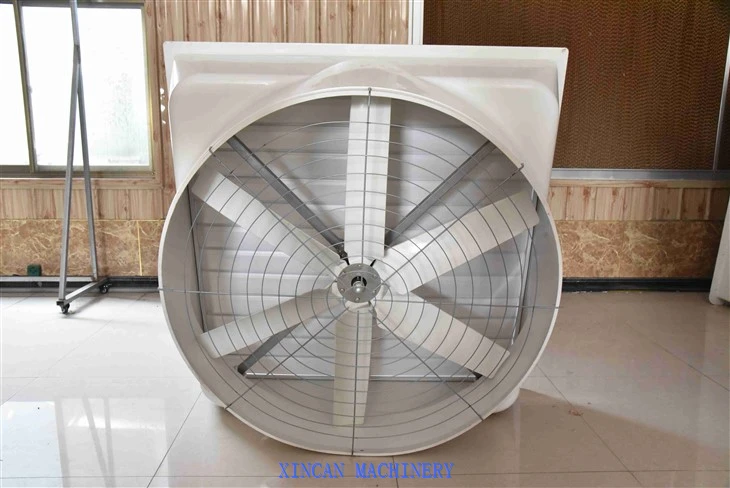
Fiberglass fan refers to an axial flow fan made of FRP material. Its biggest feature is corrosion resistance, acid and alkali resistance. It is a kind of anti-corrosion fan.
Fiberglass Fan for Factory Use
Fiberglass fan refers to an axial flow fan made of FRP material. Its biggest feature is corrosion resistance, acid and alkali resistance. It is a kind of anti-corrosion fan.
Fiberglass fan refers to an axial flow fan made of FRP material. Its biggest feature is corrosion resistance, acid and alkali resistance. It is a kind of anti-corrosion fan.
Fiberglass fan refers to an axial flow fan made of FRP material. Its biggest feature is corrosion resistance, acid and alkali resistance. It is a kind of anti-corrosion fan.
Fiberglass fan refers to an axial flow fan made of FRP material. Its biggest feature is corrosion resistance, acid and alkali resistance. It is a kind of anti-corrosion fan.
Fiberglass fan refers to an axial flow fan made of FRP material. Its biggest feature is corrosion resistance, acid and alkali resistance. It is a kind of anti-corrosion fan.
What is Fiberglass Fan for Factory Use
Fiberglass fan refers to an axial flow fan made of FRP material. Its biggest feature is corrosion resistance, acid and alkali resistance. It is a kind of anti-corrosion fan.Fiberglass fans are specifically designed to exhaust moisture-laden, corrosive or chemically contaminated air. All fans feature molded fiberglass housings that are virtually impossible to dent, crack or break. Multiple impeller types and materials are available to meet any corrosive process requirements while maintaining quiet operation and high efficiency.
Advantages of Fiberglass Fan for Factory Use
Aerodynamic Impellers
For one thing, fiberglass fan have impellers that are aerodynamically designed. Therefore, the fans produce a higher efficiency that makes them perfect for a broader range of applications.
Weight Reduction
Another benefit associated with fiberglass fan is that when compared to other types of fans, there is a noted reduction in weight. Not only does this enhance durability, it actually helps extend the life of the mechanical drive systems, including motors, bearings, gear boxes, and more.
Systems and Ratings
Fiberglass fan only need light-duty bearing systems, as well as lower drive motor ratings.
Less Power Consumption
To operate fiberglass fan, less power consumption is required. Ultimately, this saves on energy, especially when making a comparison to other metallic-type fans.
Noise Pollution
One advantage of fiberglass fans that people appreciate is the reduced amount of mechanical noise and flow sound. As imagined, this makes the working environment more enjoyable as well as safer from a hearing perspective.
Durability and Lifespan
Due to their enhanced mechanical strength, fiberglass fans are more durable, and they have a longer lifespan.
Choosing fiberglass fans hinges on their ability to move a specific air volume against the ventilation system's total static pressure. But how much static pressure should we add for the fiberglass fan itself? Three types of pressure losses caused by fans – friction, dynamic, and component.
Friction Pressure Loss
Friction pressure losses happen when air particles touch stationary surfaces. While significant in long ducts, most fiberglass fan housings are short, so these losses are minimal. Plus, fan curves already account for friction losses, so there's no need to add them to the system's total static pressure.
Dynamic Pressure Loss
This loss occurs when airflow changes direction, spreads out, narrows, or enters and exits spaces. Fiberglassfans face moderate dynamic pressure loss as air enters and exits. The diagrams show air entering fans with simple and flanged openings.
These openings cause pressure loss because some air must turn 180 degrees (simple opening) or 90 degrees (flanged opening). The loss amount depends on the opening type's loss coefficient and air velocity at the fan opening.
One way to lower the system's total static pressure is by adding an inlet cone to the fan opening. The diagram shows how an inlet cone creates a smoother air entry, reducing the loss coefficient and dynamic pressure loss. If the cone maker doesn't provide data to calculate the static pressure decrease, you can estimate it using the difference in loss coefficients between the inlet cone shape and the opening type assumed by the fan curve.
An inlet cone is useful when the total system pressure requires more fan horsepower. Adding a cone might be cheaper than the extra costs of a higher horsepower motor.
Component Pressure Loss
This loss comes from adding items like filters, dampers, hoods, and guards to a fan. You must add these pressure losses to the system's total static pressure. Most component makers provide data to determine the pressure loss based on air velocity at each component's inlet or outlet.
Types of Fiberglass Fan
Backward Inclined Centrifugal (BC) Fan
This centrifugal fan comes in 16 standard sizes, with a capacity of up to 90,000 cubic ft./min. and static pressure of up to 10 in.
Upblast Centrifugal (CV) Fan
This comes in five size options, a capacity of up to 15,000 cubic ft./min., and static pressure of up to 2 in. It is mainly used in the HVAC, pharmaceutical, chemical, food and beverage, and wastewater industries.
Inline Centrifugal (IL) Fan
This product features an inline casing design with a backward curved blade. The fan comes in six standard sizes, a capacity of 20,000 cubic ft./min., and static pressure of up to 9 in.
Radial Blade Centrifugal (RB) Fan
The fan comes in 12 standard sizes and features a radial blade with a fiberglass housing. It has a capacity of up to 20,000 cubic ft./min. and static pressure of up to 20 in.
Wall Box (WB) Fan
The WB fan comes in 13 different sizes with a capacity of up to 90,000 cubic ft./min. and static pressure of 2 in. It has a wall box mounting, and custom resin formulations are available.
Tube Axial (TA) Fan
This axial fan is available in sizes from 12 to 60 in. It has a capacity of up to 90,000 cubic ft./min. and static pressure of 2 in. It features a C-glass surface veil, fiberglass motor mount, and heavy-duty bearings.
Tube Axial Hooded (TAHD) Fan
With 13 available sizing options, these fans have a 316 stainless steel shaft. Capacity goes up to 90,000 cubic ft./min.
Tube Axial Upblast (TAUB) Fan
These fans have 13 sizes available, an adjustable motor plate for belt tensioning, a stack cap with curb cap and butterfly dampers, a fiberglass weather cover, and heavy-duty flange mount bearings.
Factors Affecting the Vibration of Fiberglass Fan
The vibration generated by the fan is one of its most important technical characteristics. It allows to judge the quality of the design and manufacture of a product. Increased vibration may indicate improper installation of the fan, deterioration of its technical condition, etc.
For this reason, fan vibration is usually measured during mechanical run tests and during installation prior to commissioning. The vibration data of the fan is also used in the design of the fan support and the connected air ducting.
Therefore, any restrictions on the values of individual discrete components of vibration or vibration parameters in frequency bands should be introduced only in cases where exceeding these values indicates a fan malfunction. The number of vibration measurement points should also be limited based on the intended use of the measurement results.
Increased vibration of the fan is one of its main troubles causing premature failure of units, parts, impeller, blades, bearing supports, couplings, destruction of the foundation and the fan itself as a whole.
The vibration level of the fans most accurately reflects the current technical condition of the fan, the quality of its assembly and installation. In other words, by monitoring the vibration level of the fan, it is possible to identify all of the above flaws and take timely measures to eliminate them, ensuring trouble-free operation of the fan.
The fan manufacturer is responsible for balancing the fans. Balancing is usually carried out on highly sensitive specially designed balancing machines that allow an accurate estimate of the residual unbalance to be obtained.
A fan manufacturer can carry out balancing for several assembled elements at once which in addition to a wheel can include a shaft, a coupling, a pulley, etc.
If the fan is designed to operate from a variable speed drive higher vibration levels are possible at other speeds due to the inevitable influence of resonances. It should be noted that stalling of the air flow especially noticeable at large angles of the blade opening relative to the inlet air flow can lead to increased levels of vibration.
The vibration state of the fans after their installation is determined taking into account the rigidity of the support. Usually, when installed on large concrete foundations the support can be considered rigid and when installed on vibration isolators it is flexible. The steel frame on which fans are often installed can be either of the two specified types of support. If in doubt about the type of fan support calculations or tests can be performed to determine the first natural frequency of the system. In some cases the fan support should be considered rigid in one direction and flexible in the other.
The vibration of any fan on site depends not only on the quality of its balancing. Installation factors such as the mass and stiffness of the support system will have an impact, for example. Therefore, the fan manufacturer unless otherwise specified in the contract is not responsible for the vibration level of the fan at the site of operation.
The vibration of newly commissioned fans must not exceed the commissioning level. As the fan is in use, it should expect an increase in its vibration level due to wear processes and the cumulative effect of influencing factors.
When the vibration reaches the "warning" level it is necessary to investigate the reasons for the increase in vibration and determine measures to reduce it. Fan operation in this state should be under constant supervision and limited by the time required to determine measures to eliminate the causes of increased vibration.
If the vibration level reaches the "stop" level measures to eliminate the causes of increased vibration must be taken immediately otherwise, the fan must be stopped. A delay in bringing the vibration level to an acceptable level can lead to bearing damage, cracks in the rotor and in the welded areas of the fan housing and ultimately destruction of the fan.
When evaluating the vibration state of the fan the vibration level changes over time should be monitored. A sudden change in vibration level indicates the need for immediate inspection and maintenance of the fan. When monitoring vibration changes, transients such as grease changes or maintenance procedures should not be taken into account.
The fiberglass fans are fitted with fiberglass-reinforced plastic (FRP).
The fiberglass fan is then coated with a resin that is fire retardant. The components, such as the bearings, drives, and fan shaft, are protected from corrosion in a couple of ways.
Some styles will use an airtight enclosure while others will draw fresh air from outside the fan across the components. This ensures that corrosive fumes are not able to reach the moving components.
A gasketed access panel can be added so that the internal parts can be inspected and maintained. To prevent fumes from escaping the drive opening, a shaft seal is applied to the opening around the shaft.
Several considerations are made in order to reduce maintenance. The most important is bearing lubrication, which is served by lubrication lines that run to the exterior fan housing.
Another is properly sizing the shaft and bearings for performance and speed. This is performed to increase the fan's lifecycle as well as reduce maintenance. To isolate the motor from the airstream, the motor is placed outside of the airstream on an adaptable epoxy-coated steel base.
Precautions When Using Fiberglass Fan
One of the primary measures to mitigate the risks associated with rotating components is to install appropriate guards that prevent accidental contact with moving parts. Guards should be designed, installed and maintained in accordance with the relevant safety standards to ensure effective protection.
Conducting a thorough risk assessment is essential to identify potential hazards associated with rotating blades, belts and shafts. This assessment helps in determining the necessary control measures and safeguards required. It is important to involve qualified personnel with expertise in fiberglass fan safety engineering during the risk assessment process.
Ensuring proper design and maintenance of fiberglass fans is crucial. Fiberglass fans should be designed to minimise operator exposure to rotating components, reducing the risk of accidental contact. Regular inspection and maintenance procedures must be followed to ensure the rotating parts are in good working condition.
Operators and maintenance personnel should be provided with the correct training to raise awareness about the risks associated with rotating components. Personnel should be educated about safe work practices, including lock out/tag out (LOTO) procedures, proper use of personal protective equipment, and the importance of following established safety protocols.
In most cases, the prime area of concern is the impeller but some fiberglass fans can be belt driven, so guards are an important safety consideration. Importantly,Advanced design that allows the fan to be driven at a lower belt tension. This reduces the load on moving parts, prolonging their longevity and improving reliability.
FAQ
Hot Tags: fiberglass fan for factory use, China fiberglass fan for factory use manufacturers, suppliers, factory, fiberglass front porch fan, fiberglass functional ventilation fan, fiberglass back porch fan, fiberglass ceiling fan, fiberglass advanced ventilation fan, fiberglass air heating fan


