


Hey there! As a supplier of shutter cone fans, I've gotten tons of questions about how these nifty devices work, especially in confined spaces. So, I thought I'd take a deep dive into this topic and share everything I know.
Let's start with the basics. A shutter cone fan is a type of exhaust fan that's designed to move a large volume of air. It's called a "shutter cone fan" because it has a cone-shaped housing and shutters that open and close automatically. The shutters are there to prevent backdrafts when the fan is not running. When the fan kicks on, the shutters open up, allowing air to flow through the cone and out of the space.
Now, let's talk about how these fans work in confined spaces. Confined spaces, like greenhouses, workshops, or small warehouses, can get pretty stuffy. There's limited ventilation, and the air can become stale and full of heat, moisture, and pollutants. That's where our shutter cone fans come in.
The first thing to understand is the principle of air movement. Shutter cone fans work on the principle of creating a pressure difference. When the fan blades spin, they create a low-pressure area inside the cone. This low-pressure area sucks in air from the confined space. The air then rushes through the cone and is pushed out through the open shutters. This continuous flow of air helps to replace the stale air inside the space with fresh air from outside.
In a confined space, the placement of the shutter cone fan is crucial. You want to place it in a location where it can draw in the most stagnant air. For example, in a greenhouse, you might place the fan near the top of the structure. Hot air rises, so by placing the fan at the top, you can effectively remove the hot, moist air that tends to accumulate there. In a workshop, you might place the fan near the source of pollutants, like a welding area or a paint booth.
Another important factor is the size of the fan. You need to choose a fan that's appropriate for the size of the confined space. If the fan is too small, it won't be able to move enough air to make a significant difference. On the other hand, if the fan is too large, it can create too much airflow, which can be disruptive and inefficient.

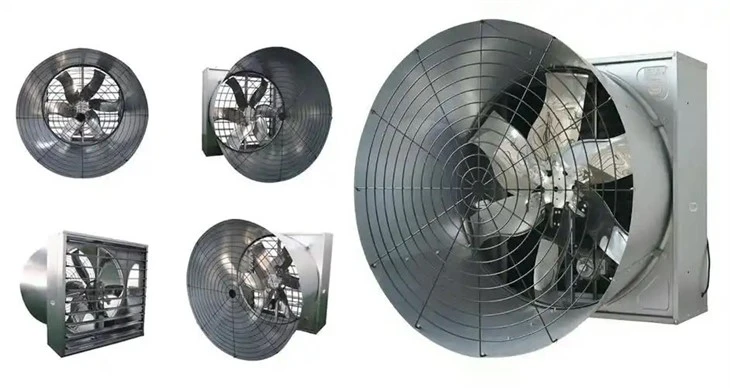
We offer a range of sizes to suit different needs. For instance, our 50inch Shutter Cone Fan For Greenhouse is a great option for medium to large greenhouses. It has a powerful motor and large blades that can move a substantial amount of air. If you're looking for something a bit smaller, our 1380mm Shutter Cone Fan is a good choice for smaller confined spaces. And for those who prefer the imperial measurement, our 50"shutter Cone Fan is also a popular option.
The shutters on our fans play a vital role in the operation, especially in a confined space. When the fan is off, the shutters close automatically. This prevents outside air from entering the space when ventilation is not needed. It also helps to keep out pests, dust, and rain. When the fan starts up, the shutters open smoothly, allowing the air to flow freely.
The motor of the shutter cone fan is the heart of the operation. Our fans are equipped with high-quality motors that are designed for long-term, reliable performance. These motors are energy-efficient, which means they can save you money on your electricity bills in the long run. They're also built to withstand the rigors of continuous use in a confined space.
One of the benefits of using a shutter cone fan in a confined space is that it can help to control the temperature and humidity. In a greenhouse, for example, excessive heat and humidity can lead to plant diseases and poor growth. By using our shutter cone fans, you can maintain an optimal environment for your plants. The fans help to remove the excess heat and moisture, keeping the air fresh and comfortable.
In a workshop or industrial setting, shutter cone fans can help to improve the working conditions. They can remove harmful fumes and dust, reducing the risk of respiratory problems for workers. They also help to keep the temperature down, which can prevent equipment from overheating and improve productivity.
Now, let's talk about maintenance. Our shutter cone fans are designed to be low-maintenance. The shutters are made of durable materials that can withstand the elements. The fan blades are balanced to ensure smooth operation and reduce vibration. However, like any piece of equipment, they do require some basic maintenance.
Regularly cleaning the fan blades and the cone is important. Dust and debris can accumulate on the blades, which can reduce the efficiency of the fan. You can use a soft brush or a vacuum cleaner to clean the blades. It's also a good idea to check the shutters periodically to make sure they're opening and closing properly.
In conclusion, shutter cone fans are an excellent solution for ventilation in confined spaces. They work by creating a pressure difference to move air, and they're highly effective at removing stale air, heat, moisture, and pollutants. With proper placement, sizing, and maintenance, our shutter cone fans can help to create a healthier, more comfortable environment in any confined space.
If you're interested in learning more about our shutter cone fans or are looking to make a purchase for your confined space, we'd love to hear from you. Just reach out to us, and we'll be happy to assist you with any questions you may have and guide you through the purchasing process.
References
- "Ventilation Systems for Confined Spaces" - A handbook on ventilation principles and practices.
- "Industrial Fans: Selection and Application" - A guide on choosing the right fan for different industrial settings.


