


Hey there! I'm a supplier of industrial kraft paper, and today I'm super stoked to take you behind the scenes and show you how this amazing stuff is manufactured. Industrial kraft paper is everywhere, from packaging materials to making cooling pads for chicken farms. It's tough, durable, and has a whole bunch of uses. So, let's dive right in!
Step 1: Gathering the Raw Materials
The first step in making industrial kraft paper is getting the raw materials. Most of the time, we use wood pulp as the main ingredient. We usually go for softwood trees like pine and spruce because they've got long fibers. These long fibers are what give kraft paper its strength.
Sometimes, we also mix in some recycled paper. Recycling is not only good for the environment but also helps us keep the costs down. We collect all sorts of waste paper, sort it out, and then use it in the manufacturing process.
Step 2: Pulping
Once we've got our raw materials, it's time for pulping. There are two main ways to do this: mechanical pulping and chemical pulping. For industrial kraft paper, we mostly use chemical pulping because it gives us a stronger and better-quality pulp.
In chemical pulping, we put the wood chips or recycled paper into a big digester. Then, we add a mixture of chemicals, usually sodium hydroxide and sodium sulfide. This mixture breaks down the lignin, which is what holds the wood fibers together. The lignin is removed, leaving behind the pure cellulose fibers.
The pulping process takes a few hours, and during this time, the temperature and pressure inside the digester are carefully controlled. Once the pulping is done, we have a thick, brownish pulp that's ready for the next step.
Step 3: Cleaning and Bleaching
After pulping, the pulp needs to be cleaned. We use a series of screens and filters to remove any remaining impurities like dirt, bark, or small pieces of wood. This makes sure that the final paper is clean and of high quality.
If we want white kraft paper, we also need to bleach the pulp. There are different bleaching agents we can use, like chlorine dioxide or hydrogen peroxide. Bleaching not only makes the paper white but also helps to brighten the color and improve the overall appearance. However, some customers prefer the natural brown color of kraft paper, so we don't always bleach it.
Step 4: Beating and Refining
Once the pulp is clean and (if needed) bleached, it goes through a process called beating and refining. In this step, we use machines to break down the fibers even further and make them more flexible. This helps the fibers bond together better when the paper is formed.
Beating and refining also affect the paper's properties, like its strength, absorbency, and smoothness. We can adjust the beating and refining process to get the exact properties we want for different types of industrial kraft paper.
Step 5: Paper Formation
Now comes the exciting part - making the actual paper! We take the refined pulp and mix it with a large amount of water to create a thin suspension called a slurry. This slurry is then fed onto a moving wire mesh screen.
As the slurry moves along the screen, the water drains away through the mesh, leaving behind a mat of fibers. The mat is then pressed between a series of rollers to remove more water and to compact the fibers. This makes the paper stronger and more uniform.
Step 6: Drying
After pressing, the paper still contains a lot of water. To remove the remaining water, we pass the paper through a series of drying cylinders. These cylinders are heated, and as the paper moves over them, the water evaporates.
The drying process is carefully controlled to make sure that the paper dries evenly and doesn't shrink or warp. Once the paper is dry, it's ready for the next step.
Step 7: Finishing
The final step in the manufacturing process is finishing. This can include a variety of treatments, depending on the intended use of the paper. For example, we might apply a coating to make the paper more water-resistant or to give it a smooth surface.
We can also calender the paper, which means passing it through a series of smooth rollers under high pressure. This makes the paper smoother, glossier, and more uniform in thickness.
Different Types of Industrial Kraft Paper
There are many different types of industrial kraft paper, each with its own unique properties and uses. For example, Kraft Paper Cooling Pad Wet Curtain Greenhouse For Chicken Farm is a special type of kraft paper that's used to make cooling pads for chicken farms and greenhouses. These pads work by evaporative cooling, which helps to keep the temperature down and create a comfortable environment for the animals or plants.
Another type is Resin Coated Paper Made Wet Curtain Cooling Pad. This paper has a resin coating that makes it more durable and resistant to water and mold. It's also commonly used in cooling pads.
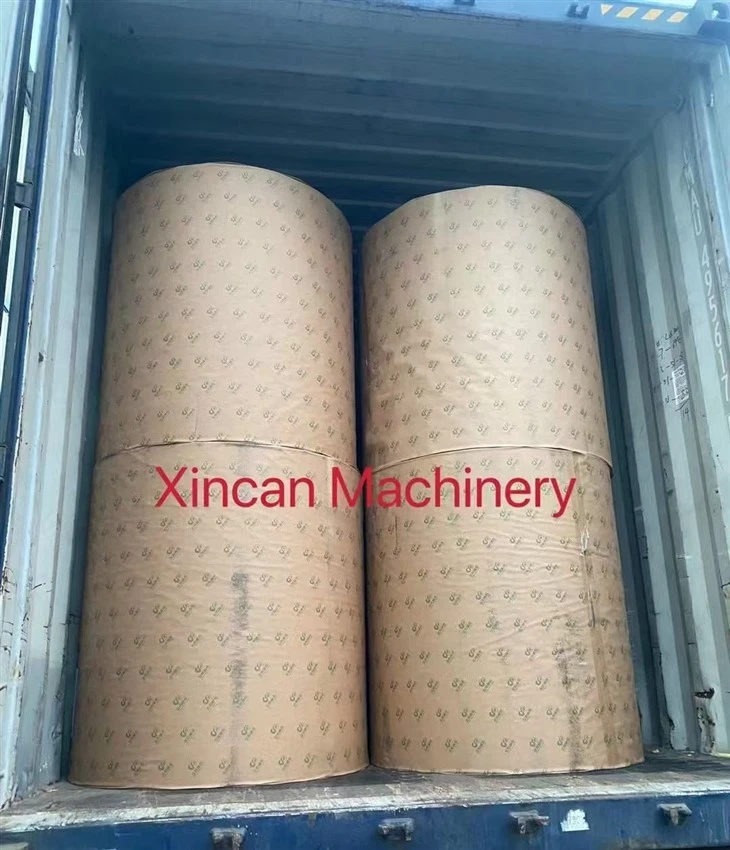

And then there's Resin Coated Roll Paper Kraft Cooling Pad Paper 95g/ 105g Paper Raw Materials. This type of paper comes in rolls and is available in different weights. The weight of the paper affects its strength and absorbency, so we can choose the right weight depending on the specific application.
Why Choose Our Industrial Kraft Paper?
As a supplier of industrial kraft paper, we take pride in offering high-quality products at competitive prices. We've got a team of experts who oversee every step of the manufacturing process to make sure that our paper meets the highest standards.
We also offer a wide range of customization options. Whether you need a specific weight, color, or coating, we can work with you to create the perfect paper for your needs. And because we're committed to sustainability, we use a lot of recycled materials in our production, which helps to reduce our environmental impact.
Let's Talk!
If you're in the market for industrial kraft paper, I'd love to hear from you. Whether you're a small business or a large corporation, we can provide you with the paper you need. Just reach out to us, and we'll be happy to discuss your requirements and give you a quote.
So, don't hesitate! Contact us today and let's start a conversation about how our industrial kraft paper can meet your needs.
References
- "Papermaking: The History and Technology of an Ancient Craft" by Mark Kurlansky
- "Handbook of Pulp and Paper Technology" by Christopher J. Biermann


