


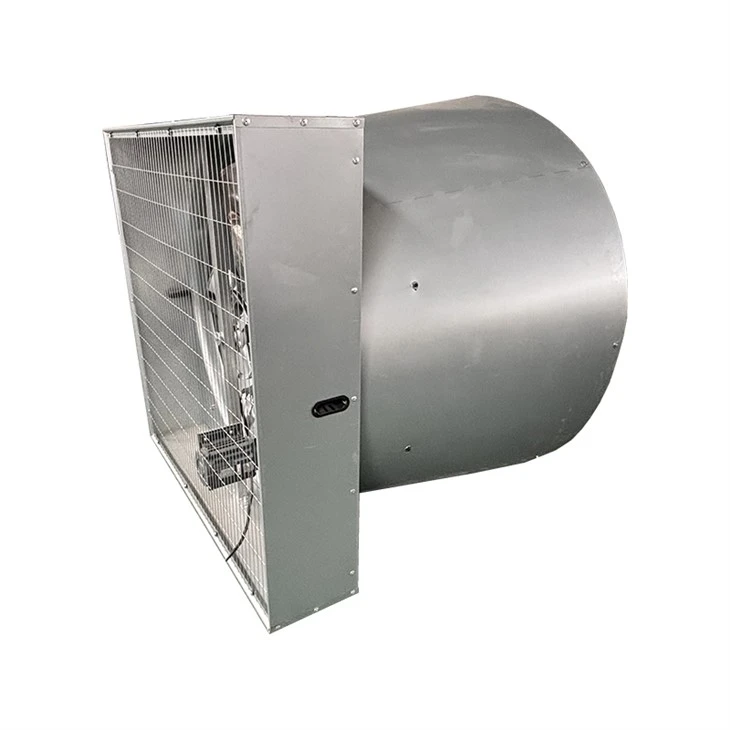
When it comes to ventilation systems, the butterfly cone fan stands out as a remarkable piece of equipment, especially in applications such as poultry farming and industrial settings. As a dedicated supplier of butterfly cone fans, I often encounter a frequent question from customers: "What is the maximum speed of a butterfly cone fan?" In this blog, I'll dive into this topic, exploring the factors that influence the speed of these fans, their practical implications, and why our butterfly cone fans are a top - choice for many.
Understanding Butterfly Cone Fans
Before delving into the maximum speed, it's essential to understand what a butterfly cone fan is. The design of a butterfly cone fan is characterized by its unique cone - shaped structure and blades that resemble a butterfly in some aspects. This design is not just for aesthetics but is engineered to optimize airflow and efficiency.
In poultry farming, these fans play a crucial role in maintaining a healthy environment for the birds. They help in removing heat, moisture, and ammonia, which are by - products of poultry excretion and respiration. In industrial settings, large - scale butterfly cone fans assist in ventilating factories, warehouses, and other spaces, ensuring proper air circulation and the removal of potentially harmful pollutants.
Factors Affecting the Maximum Speed of a Butterfly Cone Fan
The maximum speed of a butterfly cone fan is influenced by several key factors:

Motor Power
The motor is the heart of any fan. A more powerful motor can drive the fan blades to rotate at higher speeds. In our product line, we offer a variety of motor options to meet different requirements. Higher - power motors are typically used in industrial settings where large - scale ventilation is needed, while lower - power motors may suffice for smaller poultry houses. For example, a 1.5 - kilowatt motor can generally drive the fan to a higher speed compared to a 0.75 - kilowatt motor.
Blade Design
The shape, size, and number of blades significantly impact the fan's speed. Our butterfly cone fans are designed with aerodynamically - optimized blades. The unique shape reduces air resistance, allowing the fan to reach higher rotational speeds with less energy consumption. Additionally, the number of blades is carefully chosen to balance airflow and speed. A fan with too few blades may not generate sufficient airflow, while too many blades can increase drag and limit the maximum achievable speed.
Fan Size
Larger fans generally have a lower maximum rotational speed compared to smaller ones. This is because the larger the fan, the greater the inertia of the blades. However, larger fans can move a greater volume of air at lower speeds. For instance, a 1.2 - meter diameter butterfly cone fan may not spin as fast as a 0.6 - meter diameter fan, but it can provide a much larger airflow rate.
System Resistance
The resistance in the ventilation system also affects the fan's speed. In a poultry house, if there are obstructions in the ductwork or if the air intake and exhaust are not properly designed, the fan has to work harder against this resistance. This can limit the maximum speed that the fan can reach and may also reduce its overall efficiency.
Practical Maximum Speeds of Butterfly Cone Fans
In practical applications, the maximum speed of a butterfly cone fan can vary widely. For small - to - medium - sized poultry fans, the maximum rotational speed can range from 300 to 800 revolutions per minute (RPM). These fans are typically used in smaller poultry houses with relatively lower ventilation requirements.
For industrial - grade butterfly cone fans, the maximum speed can be higher, often ranging from 600 to 1200 RPM. These fans are designed to move large volumes of air in spacious industrial environments. However, it's important to note that the speed is not the only factor determining the effectiveness of a fan. The airflow rate (measured in cubic meters per hour or cubic feet per minute) and the static pressure are equally important.
Our Butterfly Cone Fan Product Line
As a supplier, we take pride in offering a wide range of high - quality butterfly cone fans suitable for different applications. Our fans are known for their reliability, energy efficiency, and superior performance.
The High Quality And Hot Sale Butterfly Cone Fan For Poultry Equipment is specifically designed for the poultry industry. It features a durable construction that can withstand the harsh conditions in a poultry house, such as high humidity and the presence of ammonia. The fan is engineered to provide a balanced airflow that helps in maintaining a comfortable and healthy environment for the birds.
For customers looking for a more general - purpose fan, the Hot Sale Butterfly Cone Fan Poultry Fan is a great choice. This fan can be used in both poultry and industrial settings, offering flexibility and high - performance ventilation.
Our Large Airflow And High Quality Ventilation Equipment Industrial Butterfly Cone Fan is tailored for industrial applications. With its large - diameter blades and powerful motor, it can move a substantial volume of air, making it ideal for ventilating large factories and warehouses.
Importance of the Right Speed
Selecting the appropriate maximum speed for a butterfly cone fan is crucial. If the fan runs at too low a speed, it may not be able to provide sufficient ventilation, leading to problems such as poor air quality, heat stress in poultry, or the accumulation of pollutants in industrial settings.
On the other hand, if the fan runs at an excessively high speed, it can consume more energy, produce excessive noise, and may even cause premature wear and tear of the components. Therefore, it's essential to match the fan speed with the specific ventilation requirements of the application.
Guiding You Through the Selection Process
When choosing a butterfly cone fan, it's important to consider the size of the space to be ventilated, the desired airflow rate, and the level of static pressure. Our team of experts is always ready to assist you in making the right choice. We can analyze your specific needs and recommend the most suitable fan model with the appropriate maximum speed.
Encouraging Contact for Purchase and Negotiation
If you're in the market for a high - performance butterfly cone fan, we invite you to reach out to us. We understand that every customer has unique requirements, and we're committed to providing you with the best - fitting solution. Whether you're a poultry farmer looking to improve the living conditions of your birds or an industrial operator in need of efficient ventilation, our butterfly cone fans are designed to meet your needs. Contact us today to start the discussion about your ventilation requirements, and let's explore how our products can make a difference in your operation.
References
- ASHRAE Handbook - Fundamentals. American Society of Heating, Refrigerating and Air - Conditioning Engineers.
- Poultry Ventilation Guidelines. National Poultry Improvement Plan.


